SafeSpread
A rover that sprays brine on driveways and walkways before they freeze.
Why we built it
Brine can keep ice from bonding to pavement, but applying it by hand can be difficult. For ENGS 21, our team built a rover to do that work on driveways and other small outdoor areas.
Phone and rover
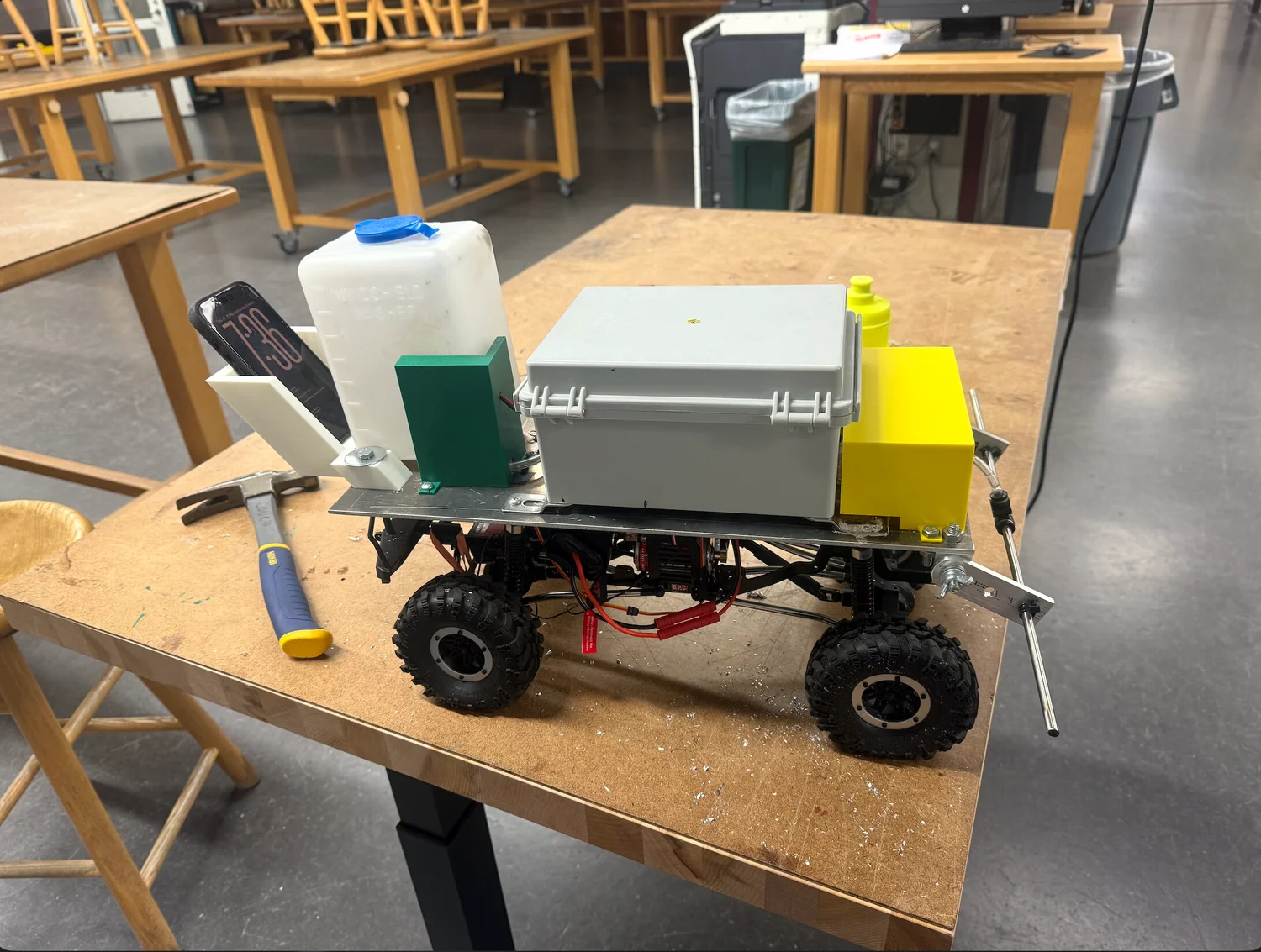
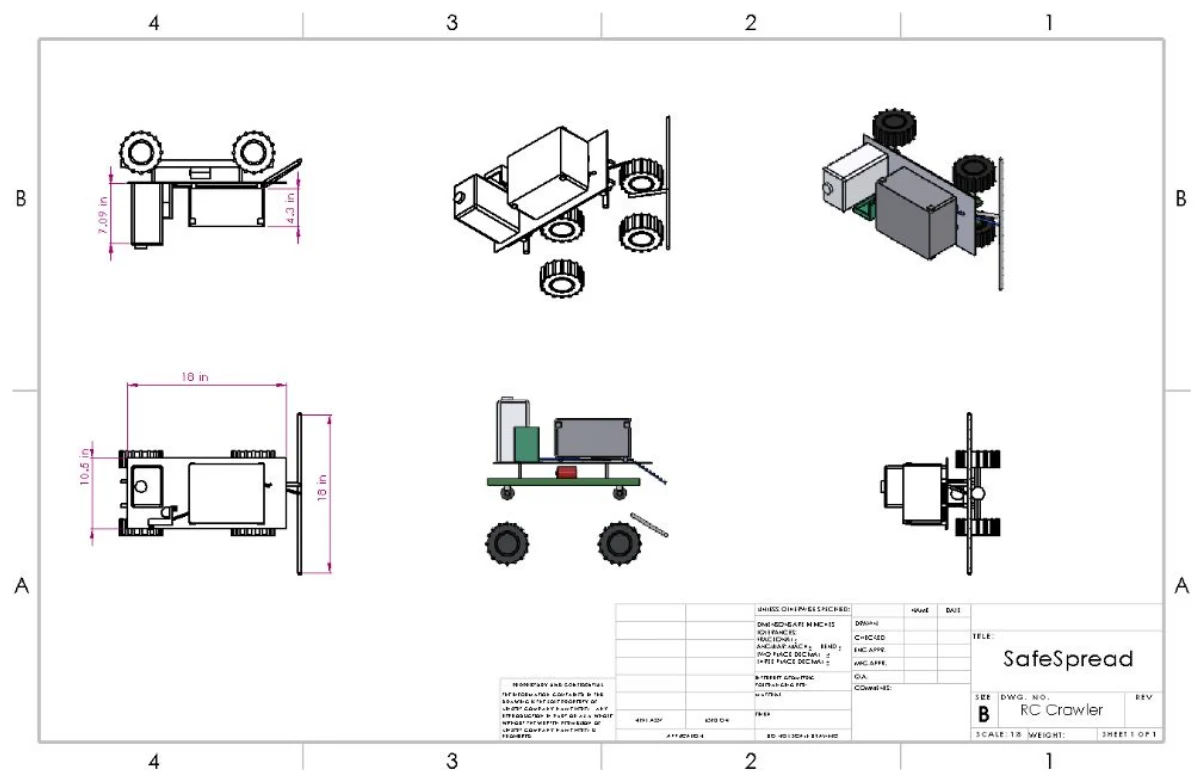
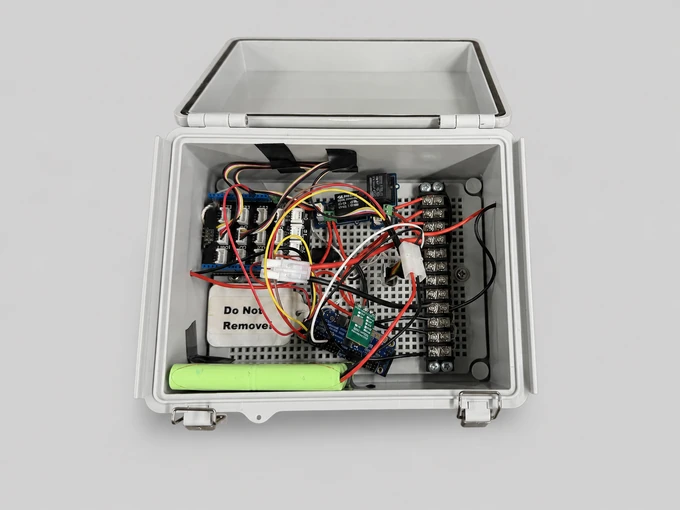
An iPhone estimates the rover’s movement with ARKit. Our app sends position and heading to an ESP32-S3, which controls steering, speed, and spraying. The RC chassis carries a 1.5-liter reservoir, pump, shutoff valve, and spray bar. The phone provides the position estimate while the controller handles the actuators. Keeping those jobs separate let us adjust navigation and low-level control without redesigning the entire rover.
Hardware changes
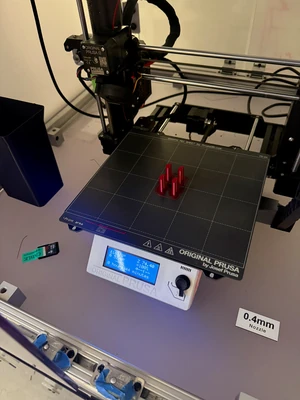
We adjusted the flow valve until the rover dispensed 5.33 mL/s and added a shutoff valve to prevent drainage between passes. Printed suspension inserts supported the loaded chassis. We then calibrated steering and speed so the rover could follow its planned route.
Testing
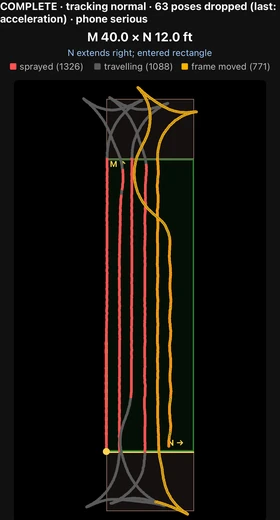
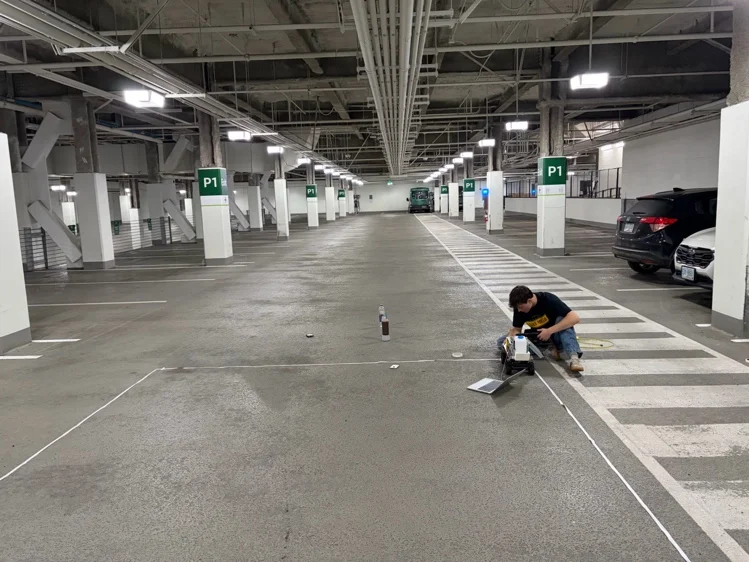
Our calibrated trial covered approximately 764 square feet per tank. Later, we tested a 40 × 12 foot autonomous route with seven spraying passes and six turns. The first attempt stopped on a navigation fault. A subsequent run finished in 6 minutes 17 seconds; the video shows it at 10× speed.
Limitations
The prototype needs supervision and a clear path. It still needs obstacle detection, winter durability testing, and a more stable chassis before it could run unattended.
Build photos and tests

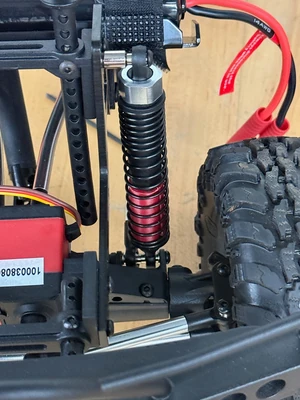
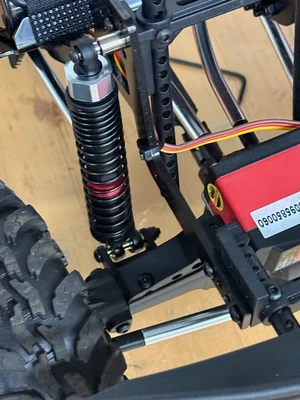
The loaded rover drives along pavement with a visible sideways lean. This test exposed the need to support the suspension.
The rover follows parallel passes inside a taped rectangle, turning beyond the ends. It completes the route and leaves visible lines of fluid on the pavement.