Taxi tipping and game theory
Modeling how taxi drivers’ and passengers’ strategies change through repeated interactions.
Two populations, two decisions
We modeled drivers choosing between efficient service and extending a trip to increase the meter fare, and passengers choosing whether to tip. Replicator dynamics describe how the share of each strategy changes when one earns a higher payoff. These are assumptions for studying incentives, not labels assigned to individual drivers in the trip data.
When signaling sustains tipping
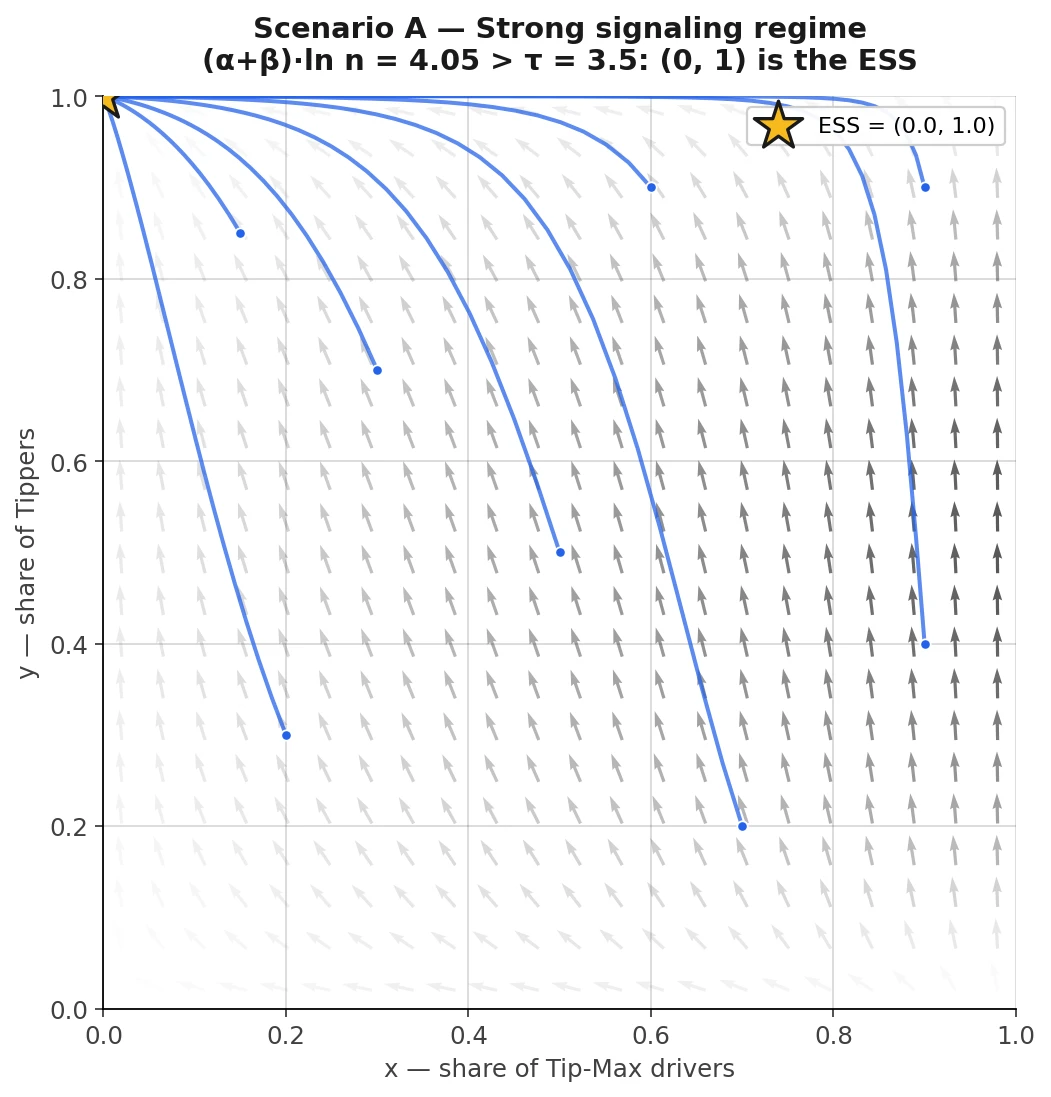
In the strong-signaling scenario, the social benefit of tipping exceeds its monetary cost. The trajectories move toward a tipping passenger population even as the efficient-driver share falls. The model therefore allows tipping to persist without reciprocal improvements in service.
When tipping collapses
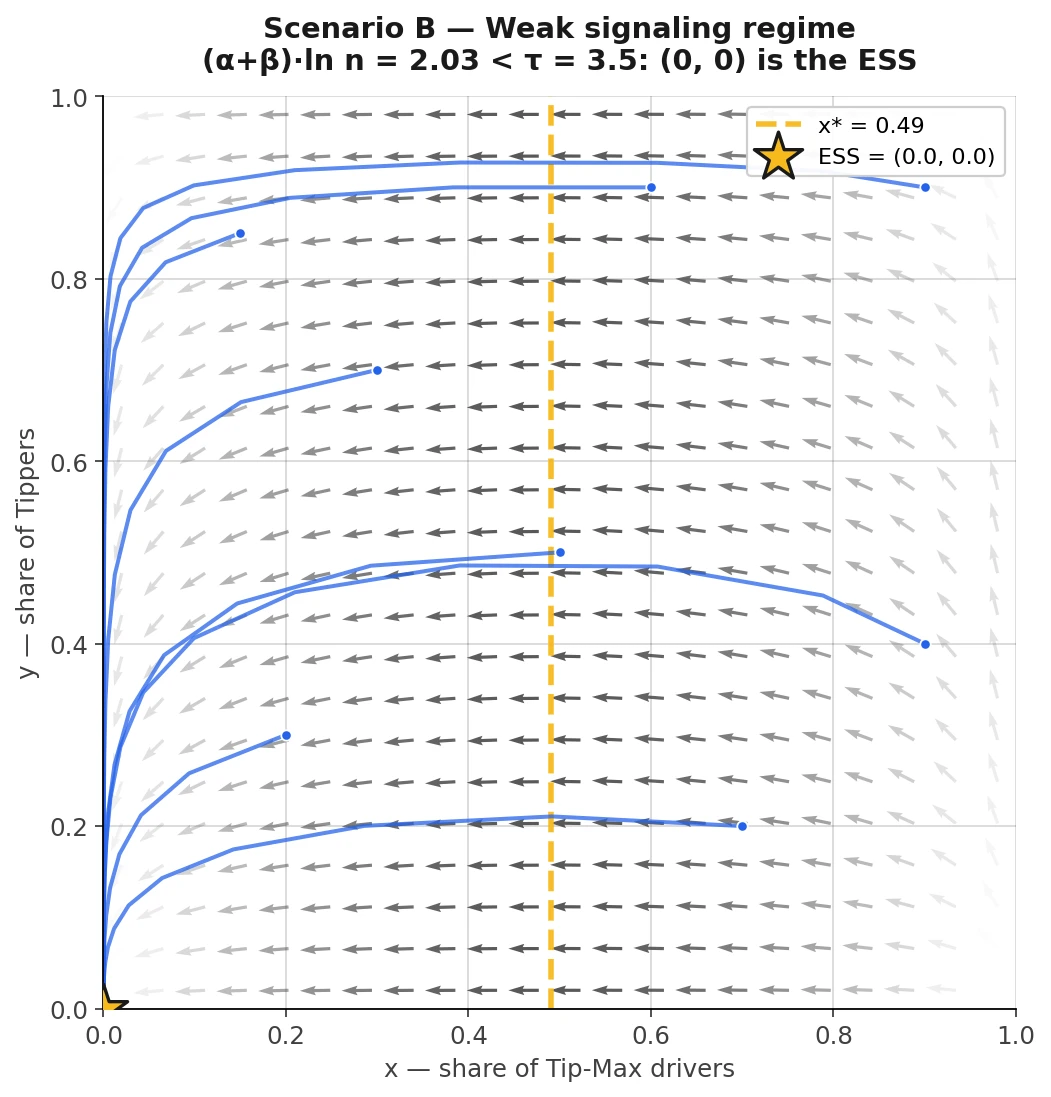
With weaker signaling, the balance changes. Some trajectories initially move toward more tipping, then reverse as the efficient-driver share drops below the threshold. In this scenario, trajectories end with neither efficient driving nor tipping. Comparing the two phase portraits shows how the same payoff structure can produce different outcomes.
Comparing the model with observations
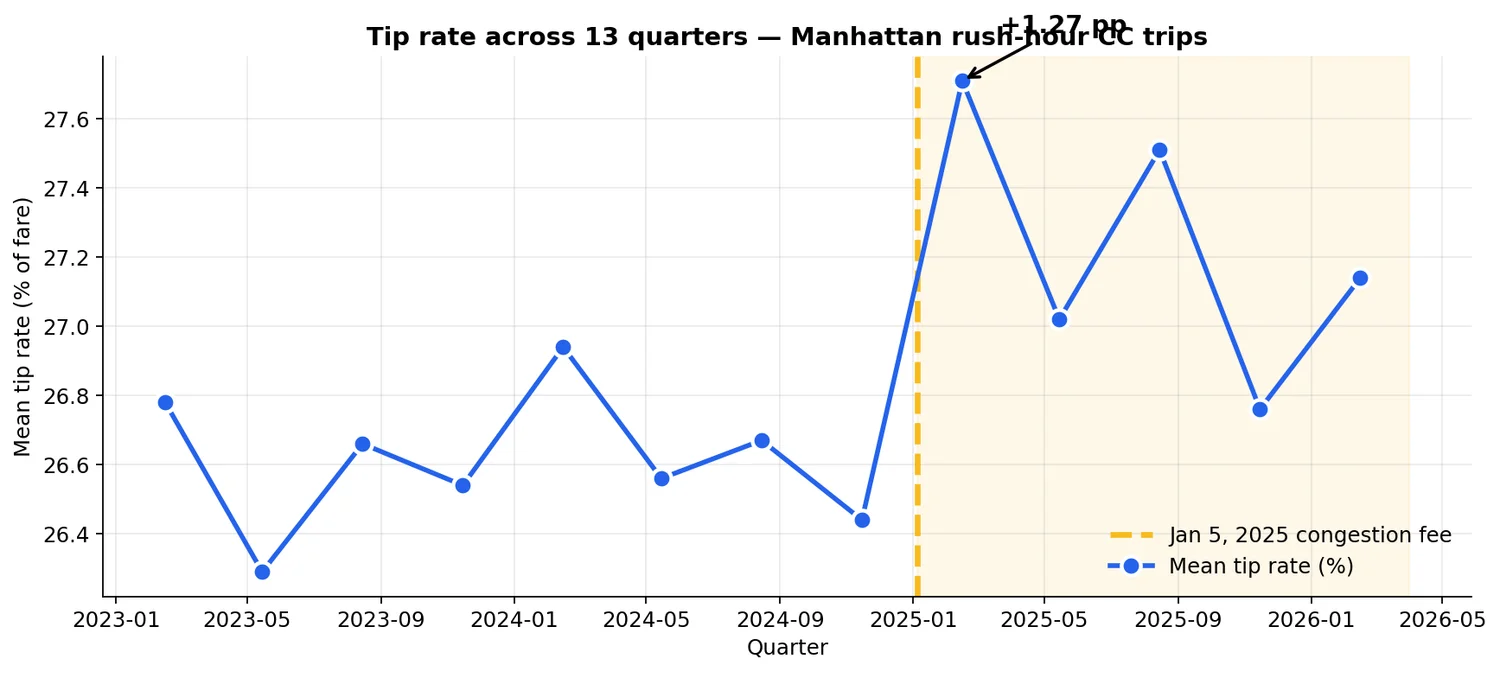
We also plotted credit-card tipping patterns from taxi-trip records. The empirical series provides a comparison with the simulated behavior, but it does not establish that signaling or a policy change caused the observed shifts. Payment defaults, ratings, and unobserved trip conditions are outside the basic two-strategy model.